
Festive savings, handcrafted for you


Chandrakalakriti
Amrita Wooden Earrings – Padauk & Boxwood Crescent Dangle Earrings
Amrita Wooden Earrings – Padauk & Boxwood Crescent Dangle Earrings
Couldn't load pickup availability
Amrita Wooden Earrings – Padauk & Boxwood Crescent Dangle Earrings
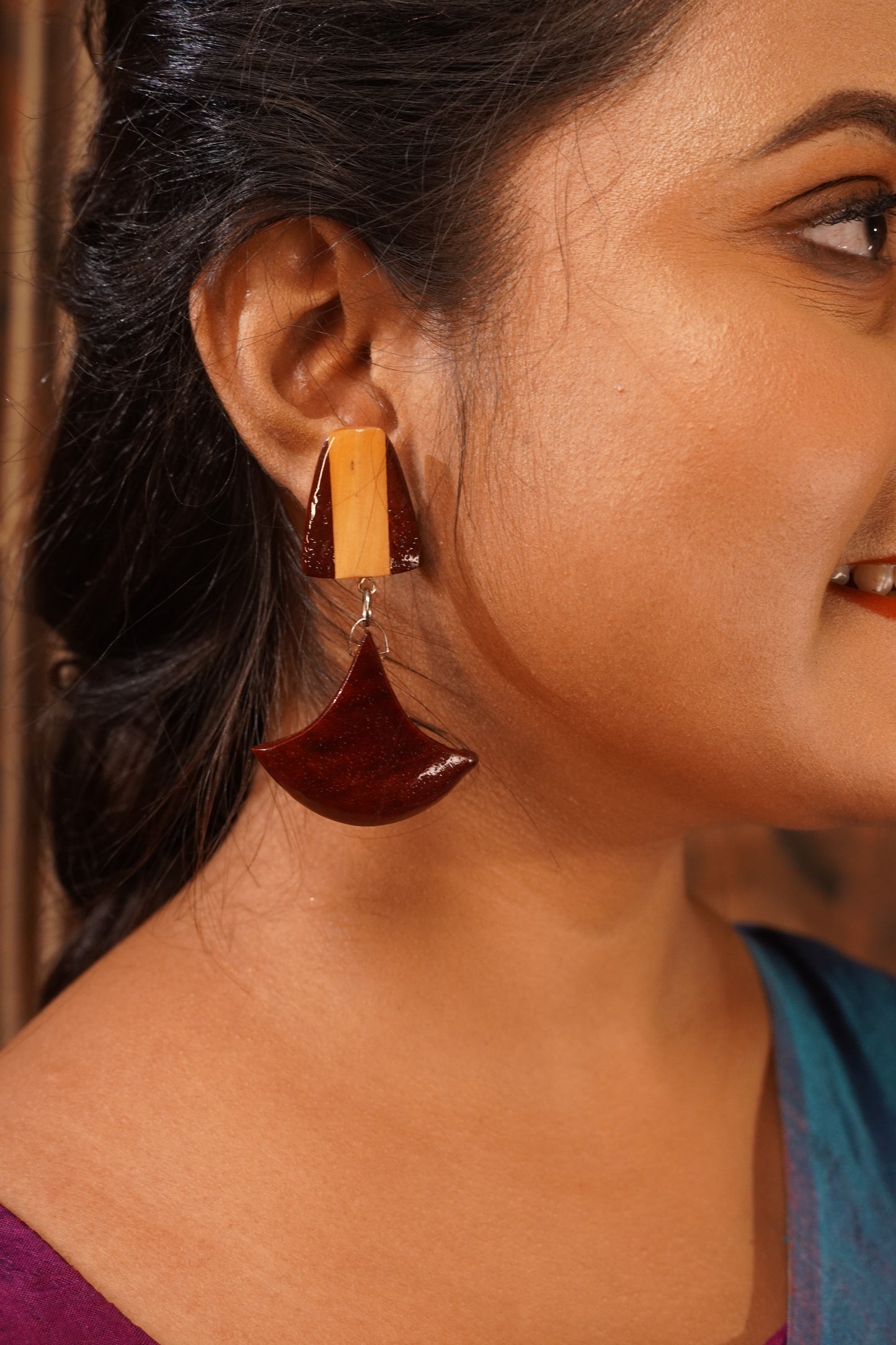
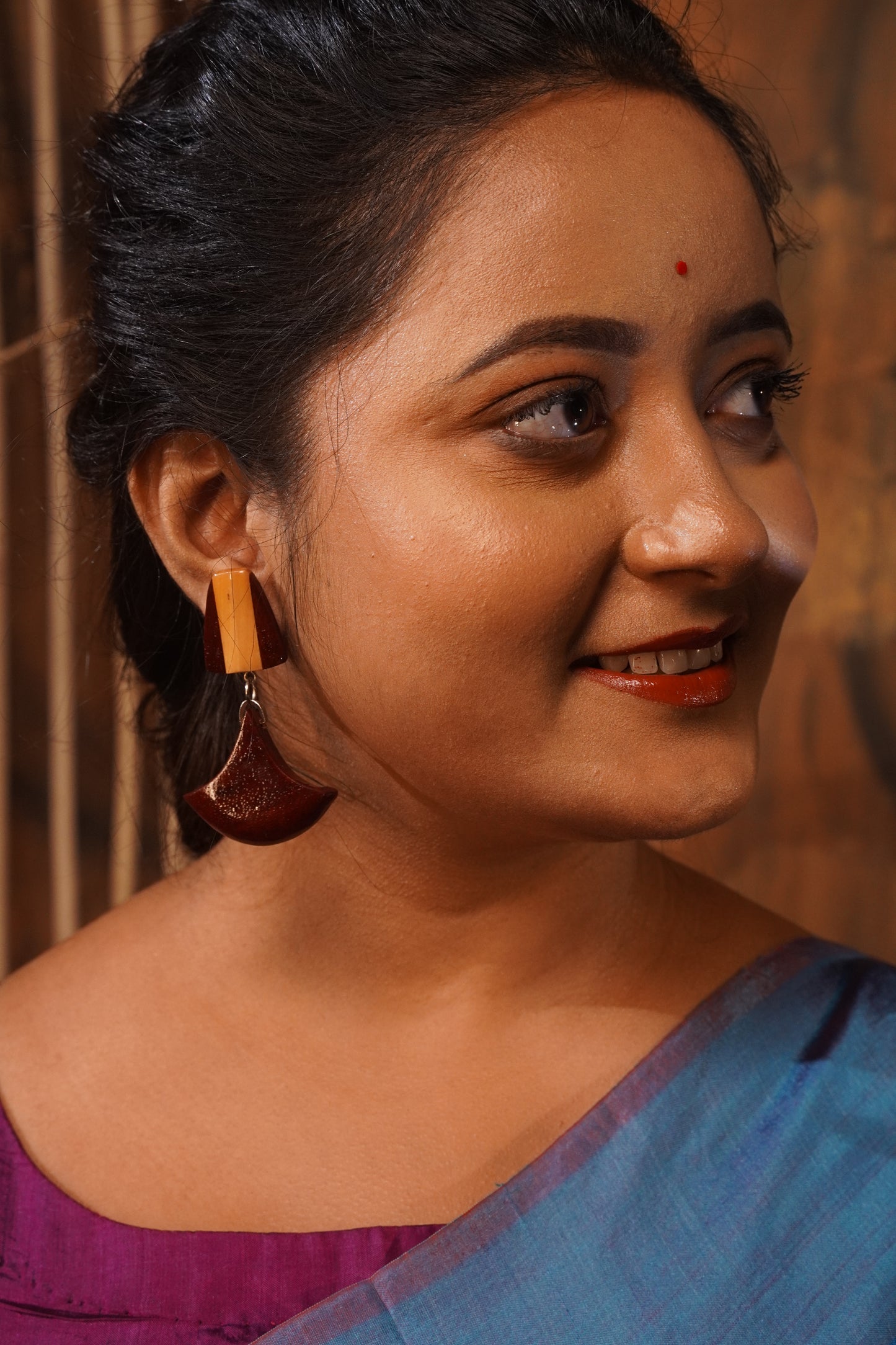
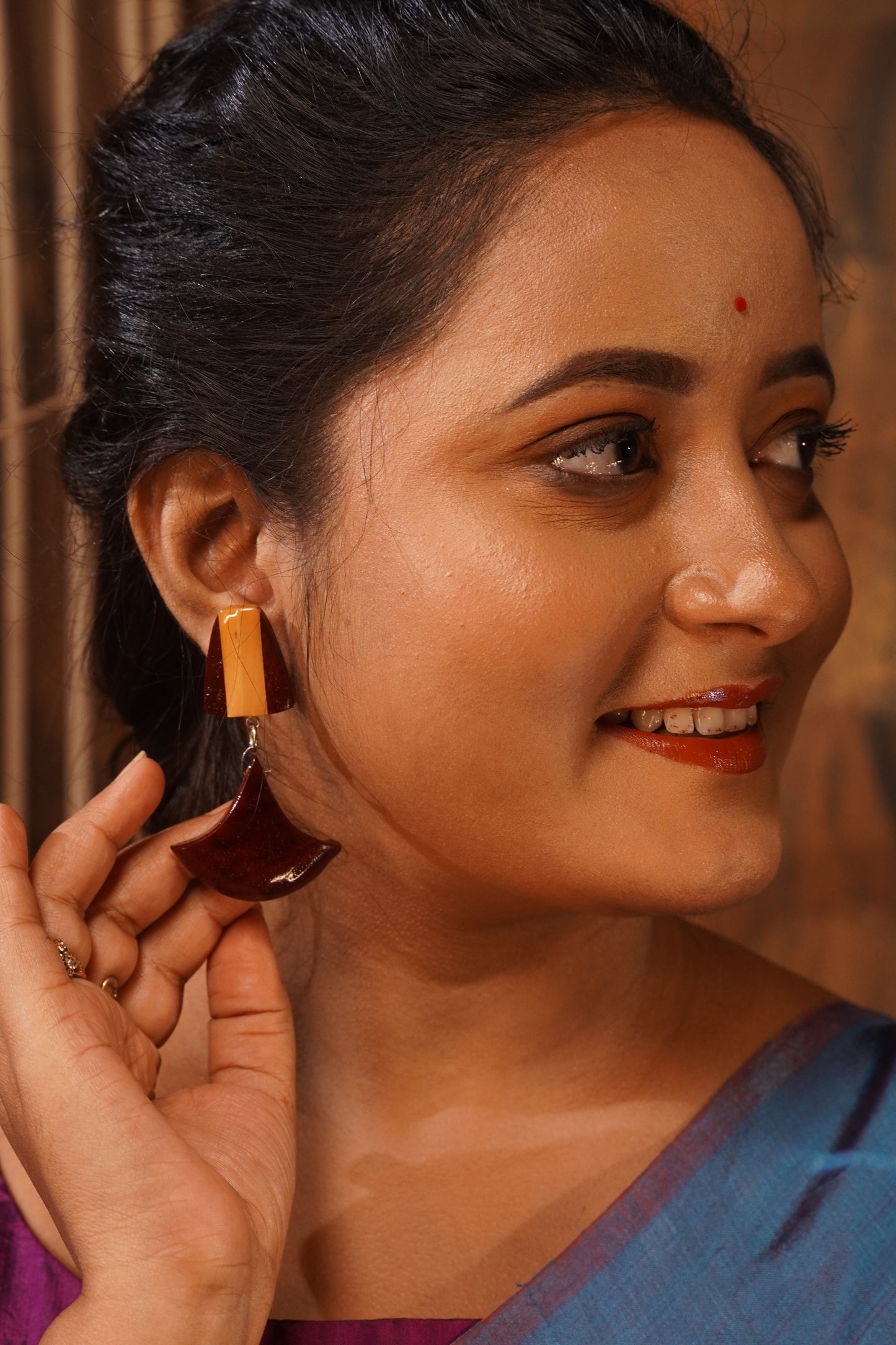
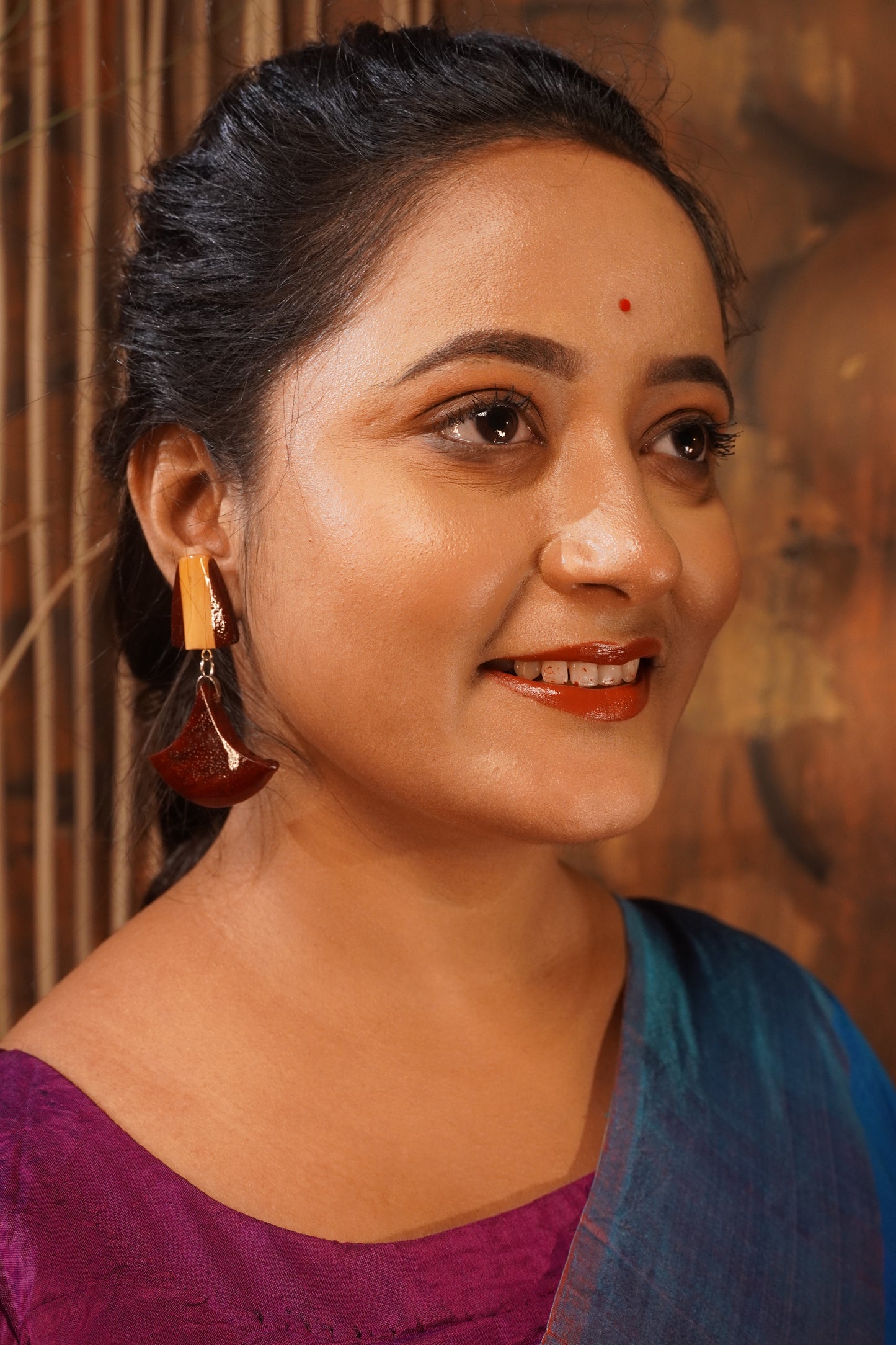
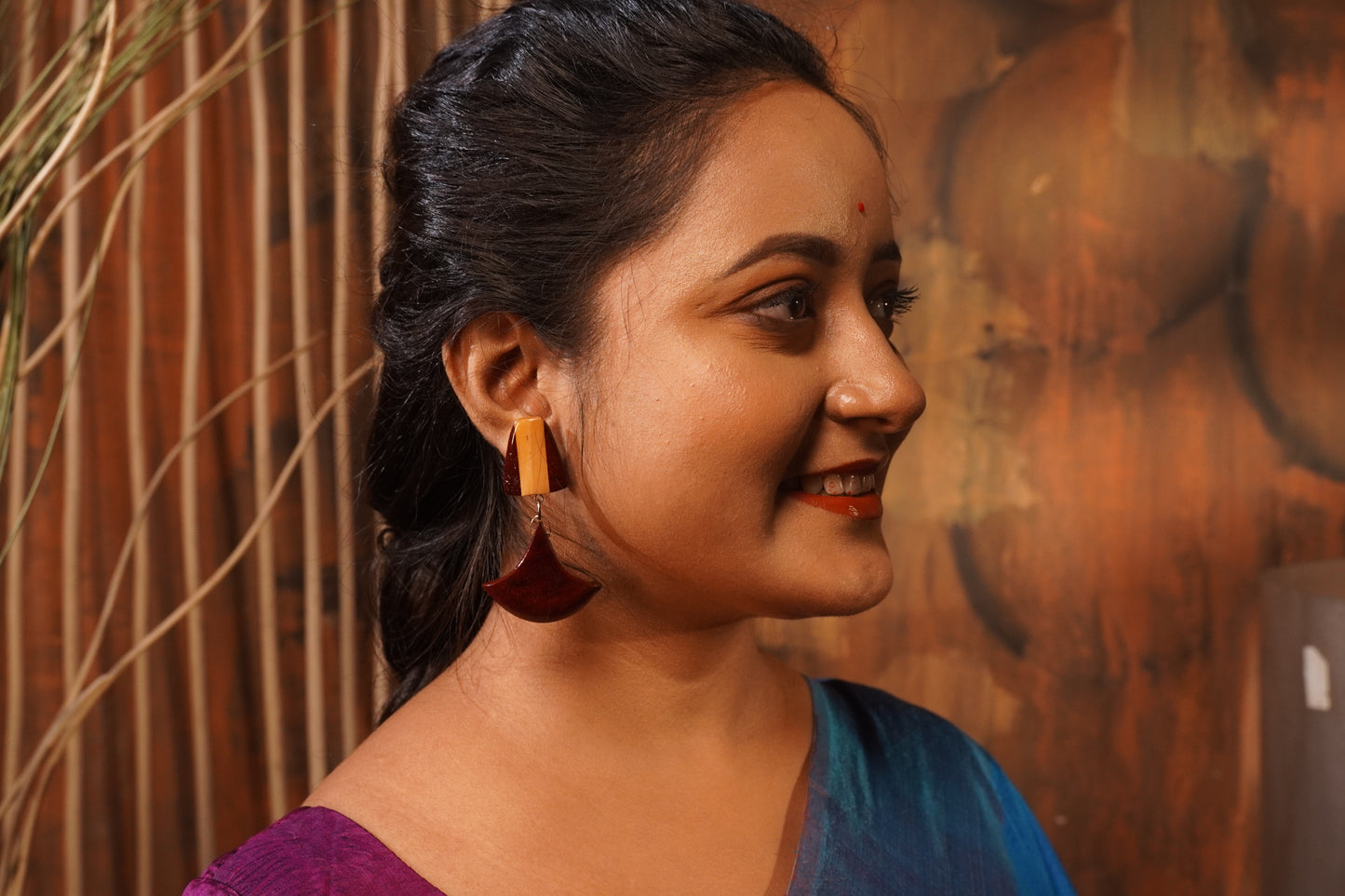
Amrita is almost entirely one wood. A tapered block of deep red Padauk sits at the lobe, and below it hangs a broad blade in the same Padauk — a wide curved edge sweeping up to two raised points. The only light in the whole piece is a single narrow band of pale Boxwood running down the centre of the upper block.
The shape reads two ways. Some see an axe head, the paraśu form that recurs through Indian iconography — grounded, decisive, weighted at the base. Others see a crescent lying on its back. Neither reading is wrong, and the piece is more interesting for holding both.
That single pale strip does all the work. Remove it and you have a dark earring; leave it in and the eye is drawn straight up to the ear before travelling down into the curve. It is a lesson in how little contrast a design actually needs when the proportion is right.
The Padauk is at its settled depth here — a rich brick red rather than the bright coral it starts as. Both colours are the wood's own, with no dye, stain or paint anywhere in it.
The pair weighs 10 g.
What Amrita is made from
- Upper block: Padauk (African Coral Wood), tapered, joined with a pale Boxwood band down the centre
- Lower element: Padauk, cut as a broad curved blade — an axe head, or a crescent on its back
- Colour: natural deep red Padauk with natural cream Boxwood; no dye, stain or paint
- Findings: metal alloy hooks
- Weight: 10 g per pair
- Sold as: one pair
- Made in: India, from responsibly repurposed exotic hardwoods, handcrafted by skilled artisans
Joined, not inlaid — and why that is harder here
There are two ways to put a pale line into dark wood. You can inlay it: cut a channel into a solid block and set a strip into the groove. Or you can join it: take three separate pieces — Padauk, Boxwood, Padauk — and bond them edge to edge, then shape the whole thing as a single object.
Amrita is joined. Each face where the two woods meet has to be worked dead flat and dead square before bonding, because a joint is only as invisible as the surfaces going into it. Any gap, any slight angle, and a hairline seam appears beside the pale band — and on a piece with almost no other detail, that seam is the first thing an eye finds.
The two woods then have to be shaped together as one. Padauk and Boxwood have different densities and take an edge and a polish at different rates, so bringing the whole block to a single even surface across the joint is a matter of touch rather than method. Done properly, you cannot feel where one wood ends and the other begins.
The hardest shape to hang level
A shape that tapers downward hangs itself — the weight finds the bottom and the piece settles. This one does the opposite. The mass sits low and wide in the belly of the curve while the hanging point is above it, so the whole form has to be cut evenly or it swings crooked on the ear. Getting a broad blade to hang level is a matter of judgement at the bench, not of measurement.
The two raised points are the other difficulty. The wood is thinnest exactly where it is asked to hold a shape, and Padauk earns its place here — dense and interlocked enough to carry a fine point without splitting away.
Working almost entirely in one wood
Designs built from contrasting woods let the materials do the talking. A single-wood piece cannot — it has to succeed on form alone, which means every edge and curve is exposed. Padauk is a good wood to attempt that with: dense, finely textured, and rich enough in colour that a large plain surface stays interesting rather than becoming a slab.
How to style Amrita
- Sarees: outstanding with deep jewel tones — teal, aubergine, plum, bottle green and indigo, as in the photographs; also excellent against cream and mustard
- Festive and wedding wear: the depth of the red suits evening celebrations, receptions and sangeet
- Kurtas and ethnic sets: plain fabric in a strong colour, so the blade reads as a silhouette
- Western wear: black, cream, camel, and anything with a clean neckline
- Winter dressing: the warmest palette we make — it sits well with wool and heavier weaves
Gold accents suit it; silver fights the warmth. Wear your hair back — this is a shape worth showing.
Caring for your Amrita earrings
- Put your earrings on after perfume, makeup and skincare have settled
- Remove them before bathing, swimming or exercising — moisture is what stresses a join over time
- Wipe gently with a soft, dry cloth after each wear
- Store in the box or pouch provided, away from moisture, heat and direct sunlight
- Handle by the metal findings, and take care of the raised points on the blade — they are the finest part of the piece
Related designs
- Ananya — the same blade form, proportions reversed, with Ebony inlaid into a horizontal Boxwood bar rather than joined
- Chandrima — a true crescent, hung the traditional way up with the points falling
- Gulmohar — Padauk and Boxwood again, with hand-engraved floral work
- Vasanta — Padauk at its brighter coral stage, in geometric blocks
Shipping
Dispatched within 2–3 working days. Free shipping on prepaid orders within India; delivery is typically 2–3 days to metro cities and 5–7 days elsewhere in India. Cash on Delivery is available at selected locations with a ₹50 cash-handling charge. Amrita ships worldwide, arriving within 5–10 days of your order — import duties and local taxes are payable by the recipient.
Frequently asked questions
Is the pale band painted, inlaid or joined?
Joined. Three separate pieces of wood — Padauk, Boxwood, Padauk — are bonded edge to edge and then shaped together as one object. Nothing is painted, and no channel is cut. Done properly you cannot feel where one wood ends and the next begins.
What is the difference between joining and inlay?
Inlay cuts a groove into a solid piece and sets a strip of another wood into it, so the base stays whole. Joining bonds separate pieces edge to edge and shapes the result as a single object. Both are skilled; they simply fail in different places — an inlay at the channel walls, a join at the seam.
Will the join come apart?
Not with ordinary wear. A properly prepared joint in dense hardwood is as strong as the surrounding wood. What stresses any join over time is moisture, which is the main reason to keep wooden jewellery dry.
What shape is the lower element?
A broad curved blade with two raised points. Some read it as an axe head — the paraśu form found throughout Indian iconography — and others as a crescent lying on its back. Both readings fit, and the shape is deliberately open to either.
What wood gives Amrita its deep red colour?
Padauk, also called African Coral Wood. It grows red — bright coral when freshly cut, deepening to brick red over months as it meets light and air. Nothing is dyed or stained. The pale band is Boxwood, equally untreated.
Why is a broad blade harder to hang than a tapered drop?
Because the weight sits low and wide, below the hanging point, rather than falling into a point. The form has to be cut evenly across its whole width or it hangs crooked. A shape that tapers downward aligns itself; this one does not.
Will the red deepen further?
Padauk does most of its darkening early and then holds. This pair is already at its settled colour. Keeping it out of direct sunlight slows any further change.
How much do they weigh?
10 g the pair — worth knowing, since the lower blade is one of the broader shapes we cut.
Are the points on the blade fragile?
They are the finest part of the piece, so handle them with care. Padauk is dense and interlocked enough to hold a fine point, and every pair is quality-checked before it leaves us. Normal wear is fine; a fall onto a hard floor is not.
Can Amrita get wet?
Please avoid it. Remove them before bathing, swimming or exercising. If they get damp, dry with a soft cloth straight away and let them air fully before storing.
What are the hooks made of?
Metal alloy. If your ears react easily to metal, please write to us before ordering and we will help you decide.
What colours does deep red wood suit?
Jewel tones especially — teal, aubergine, plum, bottle green, indigo — and equally cream, mustard and camel. Plain fabric works better than print, because the blade reads as a silhouette.
Will my pair look exactly like the photographs?
The design will match. Padauk varies more than most woods from board to board, so the exact depth of red differs pair to pair, as does the grain in the Boxwood band.
What if my order arrives damaged?
Write to us within 48 hours with photographs and your unboxing video. The video is required for damage, missing and wrong-item claims, so please film yourself opening the parcel.
Do you ship internationally?
Yes, worldwide, generally arriving within 5–10 days. Import duties, customs and local taxes are payable by the recipient.
Share
Amrita Wooden Earrings – Padauk & Boxwood Crescent Dangle Earrings
Rs. 1,150.00